04 02 Waste from the textile industry
We work only with legal entities
Treatment calculation
We work only with legal entities
| Code | Name | Operations |
|---|---|---|
| 04 02 09 | Waste from composite materials (impregnated textile, elastomer, plastomer) | R1 R12 R13 |
| 04 02 10 | Organic material from natural raw materials (for example, fat, wax) | R1 R12 R13 |
| 04 02 15 | Waste from finishing other than those mentioned under code 04 02 14 | D10 D13 D15 |
| 04 02 16* | Dyes and pigments containing hazardous substances | D10 D13 D15R1 R12 R13 |
| 04 02 17 | Dyes and pigments other than those mentioned under code 04 02 16 | D10 D13 D15 |
| 04 02 21 | Waste from unprocessed textile fibres | R1 R12 R13 |
| 04 02 22 | Waste from processed textile fibres | R1 R12 R13 |
| 04 02 99 | Other waste from this sub-group | R1 R7 R12 R13 D10 D13 D15 |
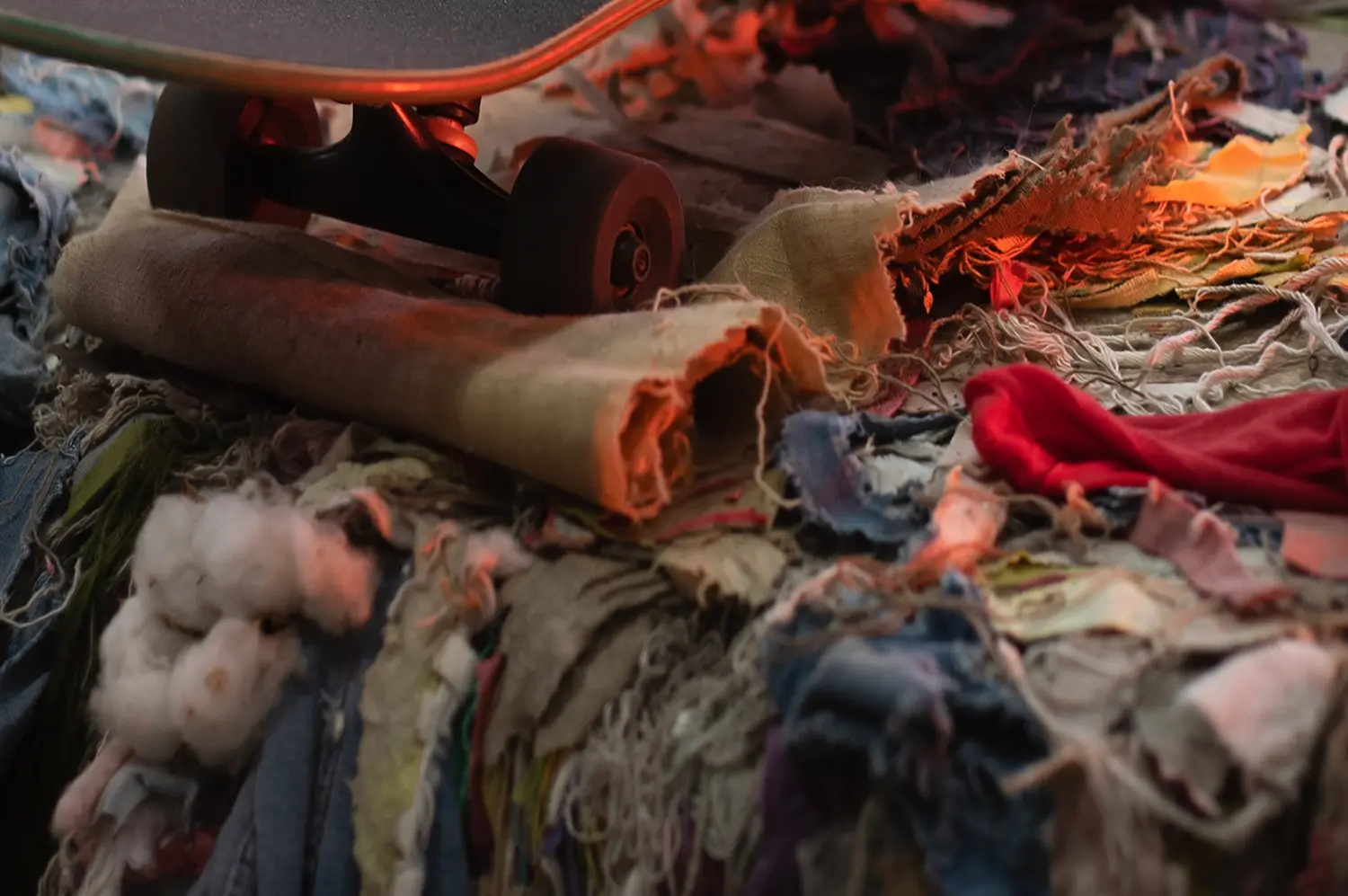
The processes of manufacturing, weaving, dyeing and processing yarn, fabrics and finished textile materials generate significant quantities of fibrous residues, which are classified under code 04 02 Waste from the textile industry. This category includes textile trimmings, defective pieces of fabric, threads, spinning fluff, cotton wool, as well as lint and fabric waste generated at garment and textile manufacturing facilities.


Since these materials may consist of both natural fibers (cotton, wool, linen, silk) and synthetic or blended fibers (polyester, nylon, acrylic) with residues of dyes or finishing agents, they require proper sorting and a differentiated approach to collection.
Environmentally responsible management of such waste in production facilities requires strict compliance with fire safety regulations, as dry textile dust, fluff and lightweight synthetic trimmings are highly flammable and can rapidly spread fire.
In addition, synthetic-fiber textiles do not decompose under natural conditions for many years, while chemically treated fabrics or fabrics containing dye residues must not be indiscriminately disposed of at ordinary landfills.
The most rational approach to managing this waste is recycling and secondary use within the framework of the circular economy.
Clean textile trimmings and fibrous production waste are shredded to produce regenerated fiber, which is used in the manufacture of nonwoven materials, insulation and soundproofing materials for the construction and automotive industries, while mixed or contaminated textile waste may be directed to energy recovery (incineration with energy generation) at specialized facilities.
LLC “DSL-2010” has all the necessary permits and authorizations to carry out its activities:
DSL-2010 LLC carries out operations for the management of hazardous waste on the basis of a license issued by the Ministry of Environmental Protection and Natural Resources of Ukraine by Order No. 704 dated 17.06.2024.
Waste treatment is carried out in accordance with the permit for waste treatment operations issued by the Ministry of Environmental Protection and Natural Resources of Ukraine No. 15068/25 dated 30.12.2025.


To determine the cost of collecting your waste, please fill out the form below and our specialist will call you back shortly:
Work stages

Order

Contract

Application

Waste collection and transportation

Full package of documents
for accounting and
environmental reporting
Document workflow

Service
agreement

Contract specification

Invoice for payment

Waybill

Acceptance and
transfer certificate (Waste transportation card)

Accounting
service completion certificate

Waste removal or disposal
certificate (upon request)
Trusted by our clients


Interested in the cost of waste treatment?
To receive an official commercial proposal, fill out the form

